Independent Media vs. The Surveillance State: Who's Really Winning?
Independent Media vs. The Surveillance State: Who's Really Winning?
In a world where state surveillance and gated media narratives are the new norm, how can independent voices survive and thrive? The answer might just lie in the power of decentralization.
The digital battlefield is heating up, and trust me, it's not for the faint-hearted. Imagine Paul Mason, a so-called journalist, pulling a James Bond move and teaming up with the UK's GCHQ to keep tabs on fellow journalist Kit Klarenberg. If that's not a plot twist worthy of a spy novel, I don't know what is. This isn't just a headline—it's the manifesto for why we need independent media now more than ever.
Now, zoom out with me for a second. We're in a world where Moscow deploys an internet whitelist to keep "bad" foreign sites at bay, while London's suburban streets see cloak-and-dagger antics straight out of a movie script. Picture this: the state wrapped in its digital emperor's clothes, dictating what stories we get to hear. It’s not just a UK or Russia thing—it's a global trend that’s possibly coming to a government near you.
The stakes? Sky-high. The decline of independent media poses a threat not only to free expression but also to our personal sovereignty. In a landscape dominated by state-sanctioned narratives, independent media is like the lone wolf howling truth into the void. The need for resilient, decentralized platforms that can outwit surveillance is more crucial than figuring out the latest crypto meme.
For the Q17 community who’s at the intersection of podcast culture and crypto debates, this is the moment to pay attention. Think of "The Swamp Log" unraveling governmental mysteries with the dramatic flair of a Lex Fridman deep dive. The real danger isn't just the surveillance—it's the carefully curated realities crafted to keep us compliant and docile.
And if you think the media swamp stops at surveillance, Matt Goodwin's critique throws another wrench into the works. Welcome to the age of "slopaganda"—where generalized narratives replace critical analysis. It’s like ordering a latte and ending up with watered-down instant coffee. Yeah, no thanks.
We need to sharpen our senses and gear up for a world where journalism doesn’t just repeat the latest Twitter trends but probes the deeper "why" behind news stories. And that’s where the heart of decentralization pulses strongest—its power isn't just in cryptocurrencies but in fracturing the monolithic narrative superstructures.
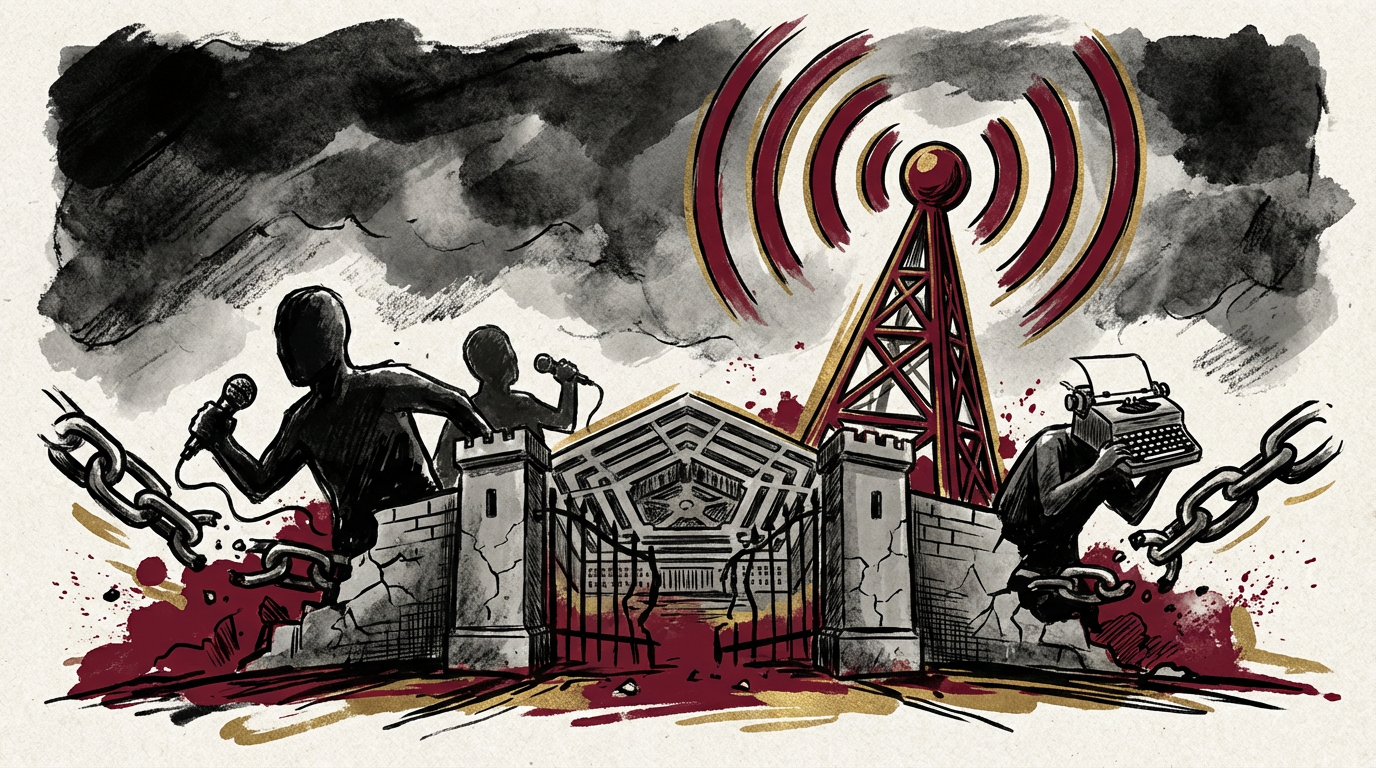
Real-world example? Look at how decentralized platforms like Odyssey and Rumble are breaking the chains of conventional media, much like how Bitcoin shattered the traditional banking fortress. Yes, they too have their hiccups, but the potential to access truth unfiltered and hear the stories untold is our cultural ticket to freedom.
So, what's your move in this high-stakes game of thrones? How do we, as creators and consumers, ensure that decentralized media flourishes? Are we ready to invest our attention, support new platforms, and become gatekeepers of our own stories?
This isn't just a media issue—it's a question of freedom, community, and the future we want to rally toward. In the spirit of the Q17 community, let's dig in, question everything, and decentralize the stories we get to tell and hear.
What decentralized platform will you support next, and how do you envision breaking free from the media monopoly? Your voice might just be the ripple needed to make waves in this era of digital deception.
About Jack Reeves
Culture & Commentary WriterSubscribe to Our Updates
Stay up to date! Get all of our resources and news delivered straight to your inbox.